

The modern music industry has created unprecedented access for independent artists, but behind the polished dashboards and impressive streaming numbers lies a hard financial truth. The Economics of Digital Streaming has become one of the most misunderstood realities affecting independent Christian music artists today. Millions of streams may look successful on the surface, yet many Gospel artists still struggle to recover recording expenses, promotional investments, and branding costs after royalty payouts arrive.
For many faith-based creatives, the mission is ministry first. Still, ministry without sustainability can quickly become overwhelming. Independent artists now find themselves navigating a fragmented digital marketplace where streaming platforms reward massive scale while smaller ministries absorb the financial pressure from mainstream service providers.
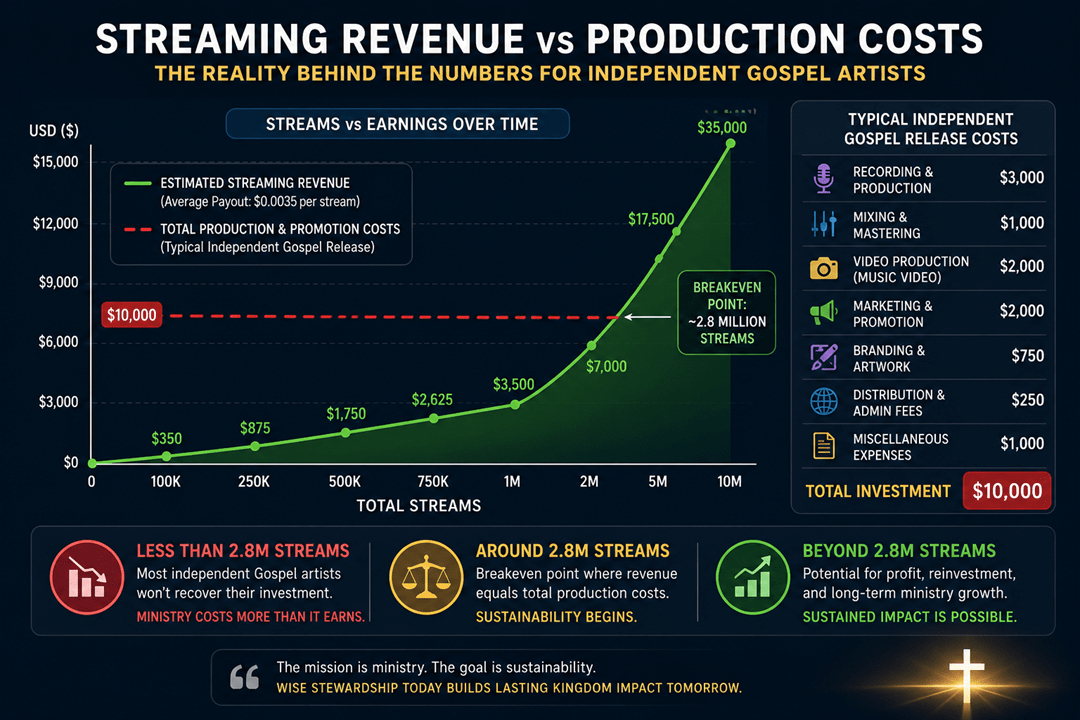
Streaming Revenue vs Production Costs
The Hidden Cost Behind Digital Exposure
Streaming platforms helped democratize music distribution. Artists no longer need major-label gatekeepers to release music globally. However, the celebration often fades when royalty statements reveal razor-thin margins.
A song that generates thousands of streams may still produce revenue that barely offsets:
- Studio recording fees
- Mixing and mastering
- Cover artwork
- Video production
- Playlist pitching
- Advertising campaigns
- Distribution subscriptions
- Website and branding expenses
For Christian artists operating independently, these costs add up quickly. The issue is not necessarily lack of talent or audience engagement. The challenge is economic structure.
As explored in Devine Jamz Gospel Network’s article on Understanding Radio Airplay Royalties, many artists enter the marketplace without fully understanding how royalty systems actually function. The result is frustration, discouragement, and financial instability.
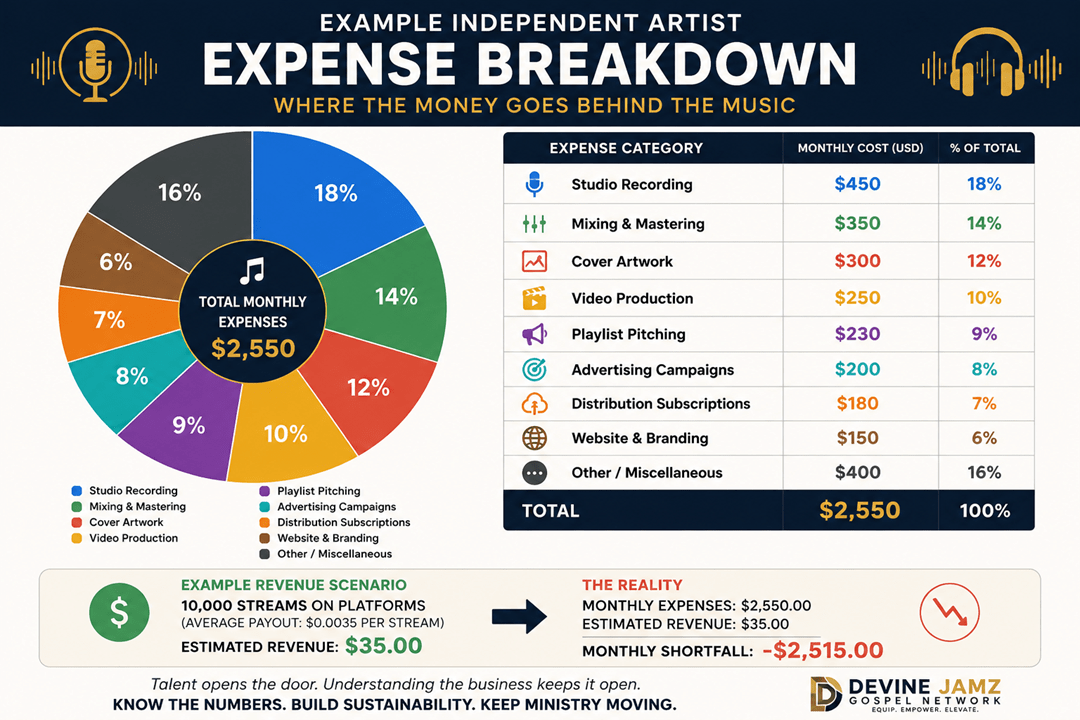
Example Independent Artist Expense Breakdown
Economics of Digital Streaming and Financial Stewardship
One of the biggest misconceptions in Christian music circles is that discussing money somehow weakens ministry authenticity. In reality, stewardship has always been connected to sustainability.
Artists investing into their calling must now think strategically about:
- Return on investment
- Audience ownership
- Long-term branding
- Diversified revenue
- Marketing efficiency
This is where many ministries are beginning to shift their thinking. Instead of chasing vanity metrics alone, independent artists are learning to evaluate actual profitability.
The Economics of Digital Streaming reveals a difficult reality: streaming visibility does not automatically equal financial health.
A song can trend online while the artist behind it struggles to finance the next project.
That tension has forced many Christian creatives to rethink the traditional promotion model entirely.
The Rise of Direct-to-Fan Ecosystems
Across the independent music world, artists are increasingly pivoting toward direct-to-fan ecosystems instead of relying exclusively on streaming playlists and FM radio exposure.
This shift focuses on relationship-building rather than algorithm dependency.
Direct-to-fan strategies may include:
- Email marketing lists
- Fan subscription communities
- Exclusive content access
- Merchandise sales
- Crowdfunding support
- Private livestream experiences
- Direct digital product sales
- Live ministry events
The advantage is simple: ownership.
When artists communicate directly with supporters, they reduce dependency on unpredictable platform algorithms and advertising systems.
Devine Jamz Gospel Network has consistently emphasized this approach through educational resources like Building a Strong Fan Base and Allocating a Budget Strategically.
Rather than viewing fans as passive listeners, modern independent artists are learning to cultivate genuine communities around shared faith, testimony, and mission.
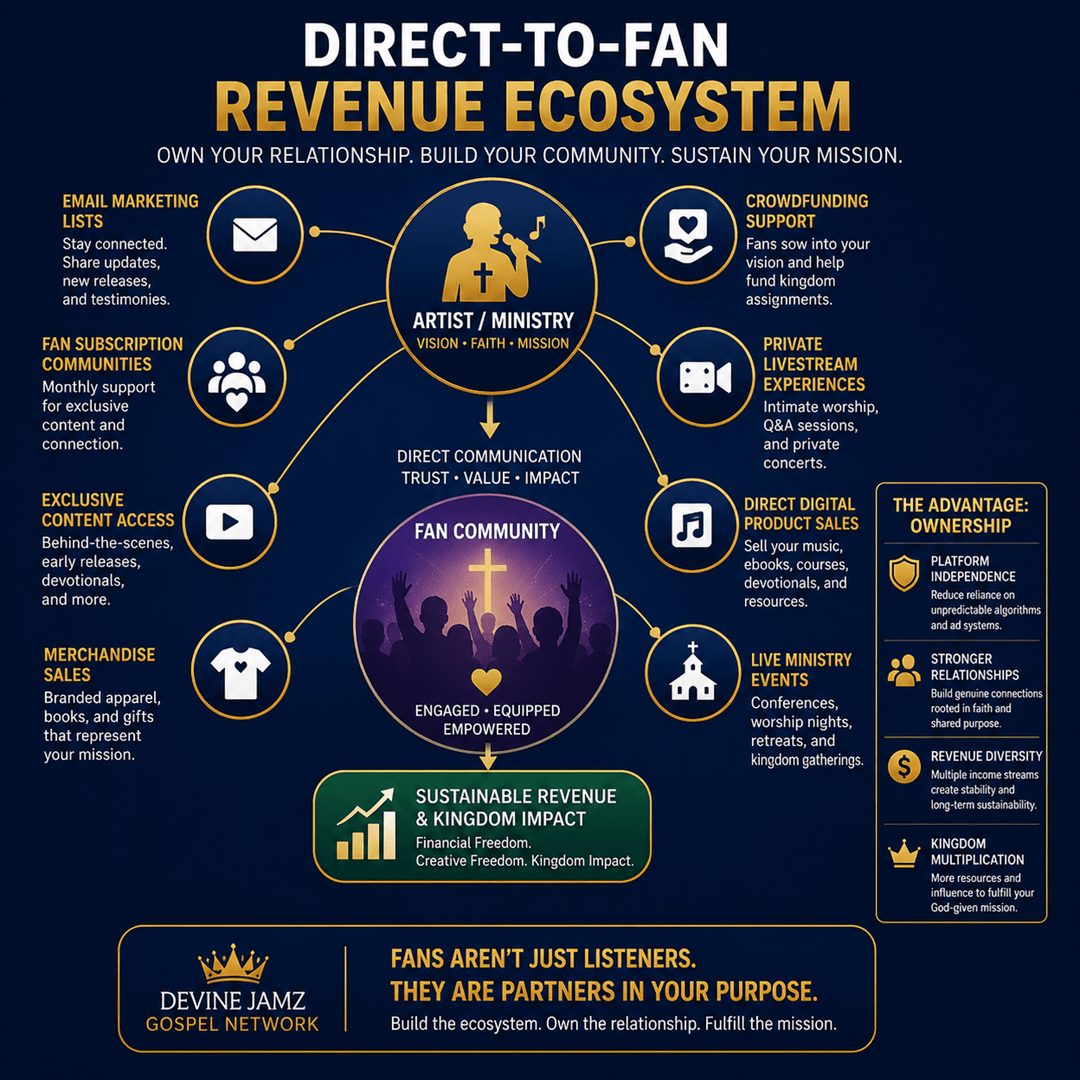
Direct-to-Fan Revenue Ecosystem
Economics of Digital Streaming in a Fragmented Marketplace
Today’s digital marketplace is more crowded than ever before. Thousands of songs are uploaded daily across platforms like Spotify, Apple Music, and YouTube.
This saturation has intensified competition for visibility while simultaneously reducing the earning potential of many independent releases.
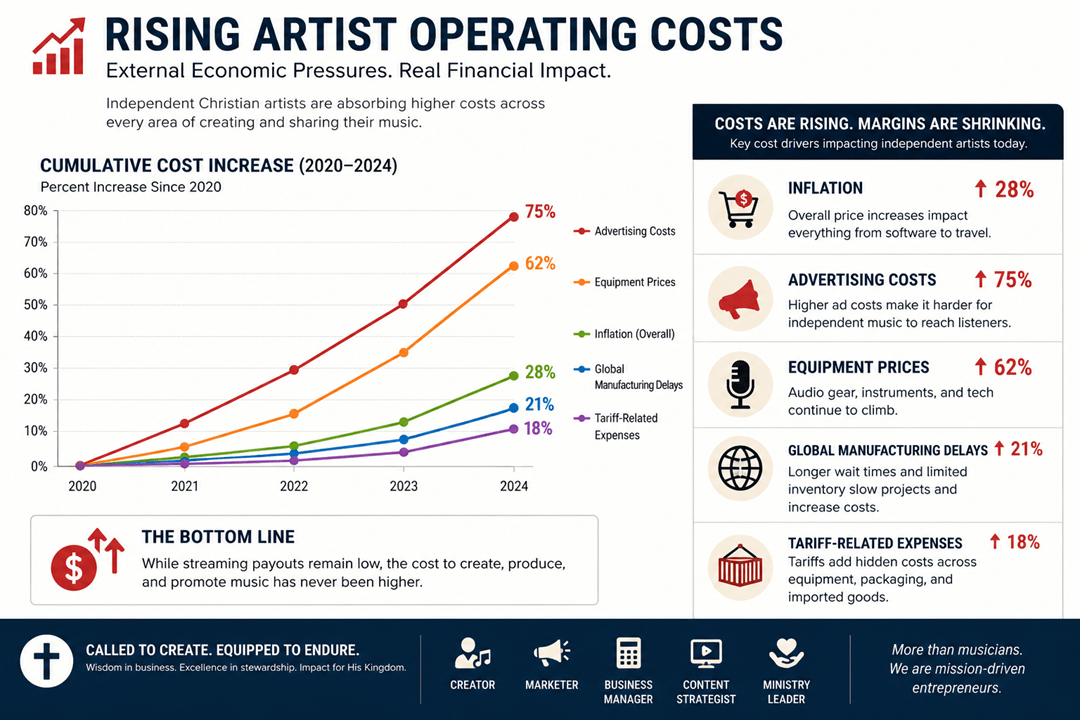
Compounding the issue are rising external business pressures such as:
- Inflation
- Advertising cost increases
- Equipment pricing
- Global manufacturing delays
- Tariff-related expenses
As discussed in Tariffs and the Music Industry, economic shifts outside the music business are now directly impacting artist operations inside the creative sector.
In many ways, independent Christian artists are now functioning as:
- creators
- marketers
- business managers
- content strategists
- and ministry leaders simultaneously
That balancing act requires both wisdom and adaptability.
Rising Artist Operating Costs
Strategic Marketing Beyond Streaming Platforms
One lesson becoming increasingly clear is that streaming should be viewed as a visibility tool — not the sole foundation of a ministry business model.
Smart artists are building layered strategies that combine:
- streaming exposure
- short-form video marketing
- social engagement
- email nurturing
- live events
- podcast appearances
- and community partnerships
Publications like the Devine Jamz Music Marketing Case Study and Advanced Insights in Music Marketing continue highlighting how modern audience behavior favors authenticity, storytelling, and direct engagement over mass-market promotion alone.
For Gospel artists specifically, authenticity remains one of the most valuable currencies available.
People support ministries they feel connected to emotionally and spiritually.
That relationship-building component often becomes more profitable and sustainable than chasing viral moments.
Ministry, Stewardship, and Long-Term Sustainability
At its core, this conversation is not about greed. It is about responsible stewardship.
Christian artists still need resources to:
- create quality music
- travel
- market projects
- support families
- and continue serving effectively
The independent artist who understands both ministry and business principles is often better equipped for long-term impact.
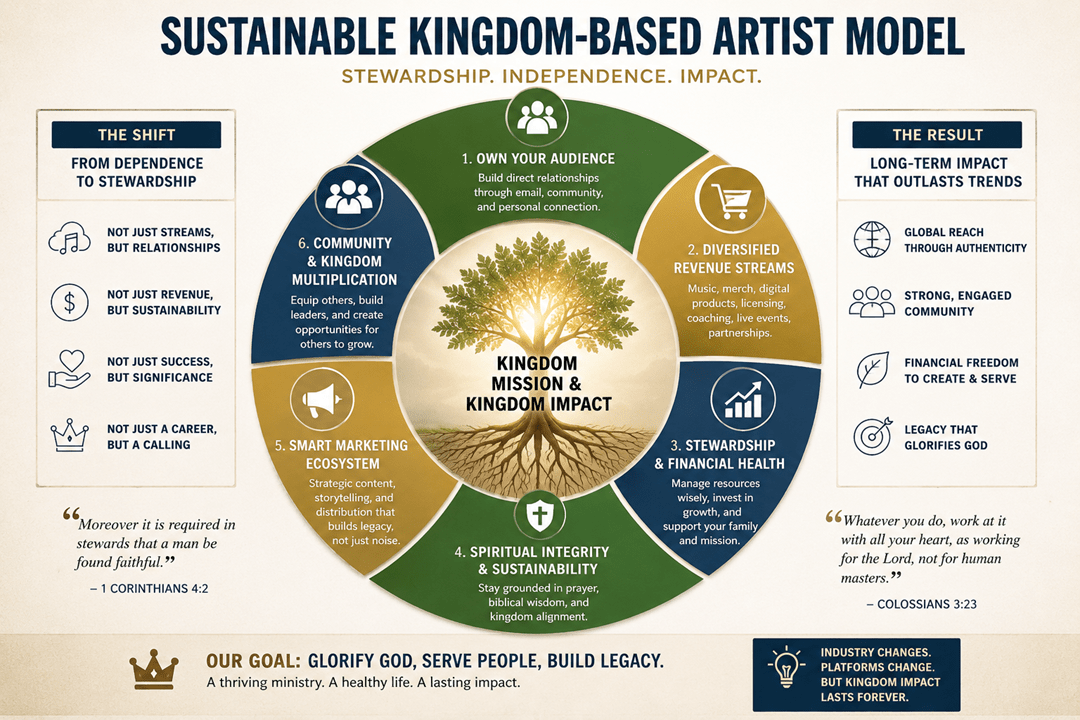
The Economics of Digital Streaming is ultimately forcing Christian creatives to ask deeper questions:
- Who truly owns the audience?
- What creates sustainable ministry growth?
- How can artists remain financially healthy without compromising spiritual integrity?
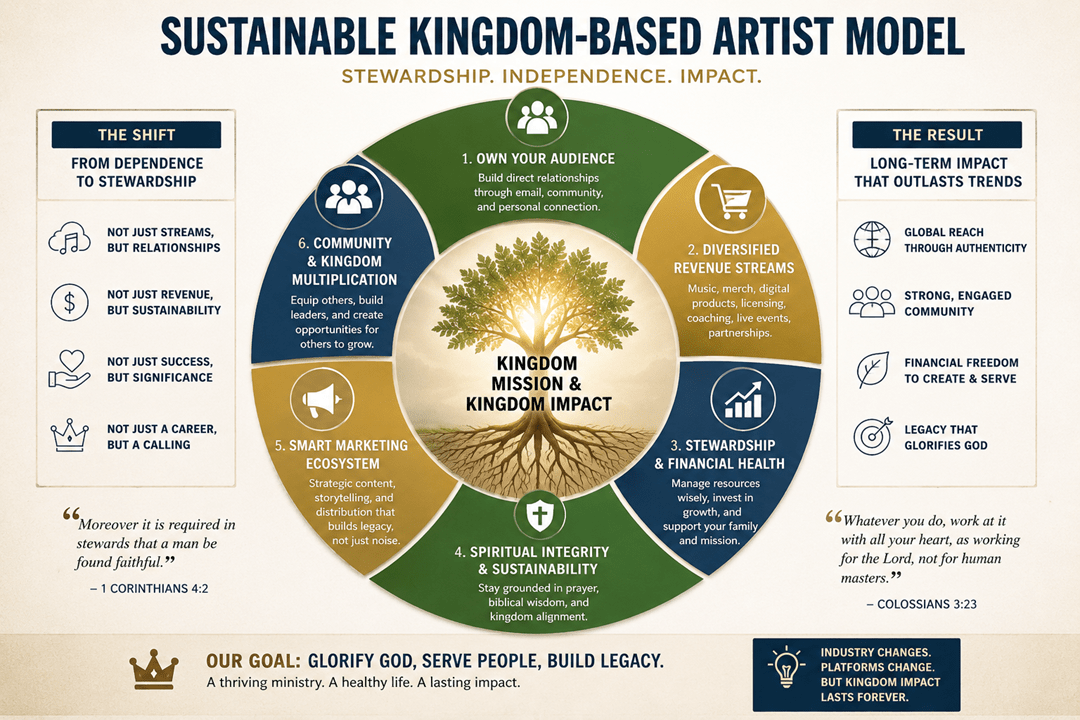
Those answers increasingly point toward strategic independence, stronger fan relationships, and smarter marketing ecosystems rooted in stewardship rather than dependence.
Sustainable Kingdom-Based Artist Model
As the digital music economy continues evolving, independent Christian artists who combine wisdom, authenticity, and strategic marketing will likely emerge stronger, more resilient, and more financially equipped to fulfill their calling in the years ahead.